
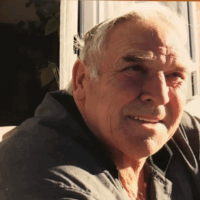
Graham Dixon and his whānau served the Ohakune community for many years, in many ways. Graham himself was a successful businessman, a Justice of the Peace (often working closely with the local police) and a member of the volunteer fire service for over 18 years. He also served on the local council and was responsible for building the local children’s playground (and for briefly bringing a military tank into town for children to clamber on and explore), whilst his wife Jane was involved in the development and start-up of the Ngati Rangi Community Health Centre and setting up support services for the elders of the community.
A Life of Independence
Graham was a fiercely independent, stoic, and capable man, who valued quality of life over quantity. Therefore, when he was diagnosed with renal cancer and offered surgery that might buy more time, but would require him to spend most of that time away in hospital, his goals were clear. More than anything, he wanted to be in his own home and to be comfortable with what time he had left.
In his first interaction with Hospice, he described himself as “living my best life” with his wife of 63yrs, and his need for Hospice input was minimal. In hindsight, his son Duane suspects his dad had hidden a lot of his pain for a number of months, so it was good to at least have a plan in place to manage this and allow him to keep busy mowing the lawns and managing his affairs. However, after a number of weeks, Graham started to experience some confusion and agitation and, by August, he was struggling with delirium.
“He became very angry and you couldn’t get through to him, but we knew that this wasn’t my dad”.
Returning to Us
The Hospice team worked with the whānau and other services to plan for any potential crises and, when the time came, swung into action with St John’s Ambulance crew supporting the whānau to get Graham admitted to Whanganui Hospital for further investigations into his delirium.
The Hospice team continued to visit Graham on the ward and to support the medical team with symptom management and, after 3 weeks, Graham was transferred to Okere House for ongoing care. Over the next two weeks, the delirium settled, with the Hospice team continuing to ensure his other symptoms were well managed, and Duane described seeing the father he knew “return to us”.
Graham himself was very clear that he needed to go home – he missed his wife and hated that she had to travel so far to see him. Time was becoming short, so the Hospice team set to work liaising with other teams to make this happen. A few days later, on a perfect, sunny morning, Graham was gently placed back in his own bed, looking out of the window at his beloved mountain, surrounded by his whānau. As Duane recalls, he gazed at the view and said
“This is everything I need, right here”.
For the next week, Duane and his whānau cared for Graham beautifully alongside Hospice and the local District Nursing team. One of the Hospice nurses lives rurally herself, so would often call in on her way to or from work, just to make sure that Graham had everything he needed. On September 23rd, Graham died peacefully in his own bed.
Whānau Support
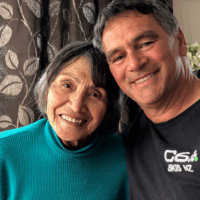
Unfortunately, Jane’s own condition had deteriorated and she had been admitted to hospital for surgery a few days earlier. After Duane had delivered the sad news to his mum, the hospital nurses and the Hospice team took time to support and watch over Jane until she could return safely home to lay her husband to rest.
Speaking with Duane and Jane a few months later, the resounding memory is of the reassurance that came from the Hospice team anticipating and planning for what might happen, so that they never felt alone or unprepared, even at the worst possible times.
“Carla (Social Worker) was a shining light and a true heart. She was an amazing person and professional, and just knew what to say and what was needed. Everyone was great at just checking in on us, with Caron (Nurse) dropping by on her way to or from work to make sure we were coping okay”.
“It was such a privilege to get dad home for that last week…he didn’t want to be anywhere but home. It was hard but we felt supported – your parents have done everything for you your whole life and they’ve given you the opportunity to become who you are, and so when they need you, it’s just what you do. It’s your turn to be there for them”.
Honouring a Life of Service
And the support came at every point of that journey – from the sensitive way in which the specialist broke the news and handed care over to the Hospice team; the collaboration between Hospice and Okere House to “bring dad back”; the seamless coordination between Hospice and the District Nursing services to keep Graham safe and comfortable at home; the good humour and understanding shown by the St John’s Crew when things had become too hard; and the support shown to Jane by the ward staff and Hospice team as she received the news of Graham’s passing –
“The hospital nurses treated mum like a queen after the news had been delivered and we were even offered the help of the Hospice Nurse to get mum home for the funeral if we needed it”.
There is a saying that it takes a whole village to raise a person. With our rural patients, especially, it certainly takes more than our small Hospice team to truly meet their needs and wishes.
Graham was sent off with a guard of honour by the Ohakune and Raetihi fire and police services, He had come home to his whānau and to his beloved community.
Why This Story Matters
At Hospice Whanganui, we know it takes a whole village to meet the needs of patients and whānau, especially in rural communities. Graham’s story is one of service, aroha, and the difference hospice care can make when it matters most.
🌿 Since 1981, Hospice Whanganui has provided free, specialist palliative care for patients and whānau – thanks to the generosity of our community.